
 By Yilu Support
You need good web scraping tools when issues with a rotating proxy for scraping arise. Many people believe that using a rotating proxy for scraping can be more expensive. They can also increase the risk of getting caught. Sometimes, they make data collection more challenging. You can try residential proxies, sticky proxies, proxy managers, scraping APIs, browser automation tools, and open-source options. These tools can help you scrape or collect data effectively. They are especially useful if you operate a data collection platform or focus on data scraping. Give Yilu Proxy’s free trial a try to discover a smarter way to handle rotating proxy for scraping.
Key Takeaways
Rotating proxies switch your IP address a lot. This helps hide who you are and stops blocks when you scrape websites.
Rotating proxies can cost a lot and be hard to use. Good tools and smart planning make scraping easier.
Residential proxies use real home IP addresses. They are harder for websites to spot and work well for tough scraping jobs.
Other choices like sticky proxies, datacenter proxies, proxy managers, scraping APIs, and browser automation have different good points for scraping.
Picking the best proxy depends on what data you want, how much money you have, and which sites you scrape. Free trials like Yilu Proxy help you find what works best.
Rotating Proxy for Scraping
What Are Rotating Proxies
When you use a rotating proxy for scraping, your requests go through many IP addresses. The rotating proxy changes the IP for each request or after some time. This hides your real IP and makes it seem like many people visit the website. Websites see requests from different places, not just one. This helps you avoid getting blocked.
Proxy pools change IPs so every request uses a new one.
This helps you get around limits and stops IP bans.
Rotating proxies make it tough for websites to spot scraping because they act like real users.
If one IP gets blocked, the pool picks another, so you keep access.
Residential rotating proxies use real people’s IPs, which look normal and are less likely to get caught.
Rotating proxies are important for web scraping. They let you collect data without being stopped by anti-bot tools. Tools like Octoparse can do this for you and give you new IPs for each request.
Common Challenges
Using a rotating proxy for scraping can cause some problems. You must choose good proxies to keep scraping working well. Free or bad proxies get blocked a lot and can stop your data collection. You also need a big and mixed proxy pool to spread out your requests and lower ban risks.
You need to manage IP changes so you do not hit limits.
You might have trouble with browser fingerprints if IPs are from many places.
Acting like a normal user, like changing request times and user agents, helps you not get caught.
Some websites use CAPTCHAs or other tools that can block rotating proxies.
Keeping your proxies working well is important for good web scraping.
A rotating proxy for scraping can cost more and be harder to use. You have to manage the proxy pool, deal with CAPTCHAs, and make your requests look normal. These problems can make rotating proxies tricky, especially if you want easy web scraping.
Alternatives to Rotating Proxies
When you want better ways to scrape websites, you have many choices. There are different proxy solutions for collecting and getting data. Each one has good and bad points. Let’s look at the best substitutes for rotating proxies and see how they work with different scraping tools.
Residential Proxies
Residential proxies use real IPs from real devices. This makes your data look like it comes from real people. Most big companies use residential proxies for scraping. They work well because they succeed 91% to 96% of the time. These proxies help you reach blocked content and avoid bans.
Here is a table that shows the main good and bad things about residential proxies and other types:
Aspect | Advantages of Residential Proxies | Disadvantages of Residential Proxies |
|---|---|---|
Authenticity | Use real device IPs, so bans are less likely | They cost more and there are not as many available |
Access | Can get to blocked content in different places | May be slower because they go through home internet |
Security | Hides your real IP, so you are safer | If used wrong, there can be legal or privacy problems |
Success Rate | Works better for scraping because it looks real | Harder to set up and manage |
Use Cases | Good for checking prices, SEO, research, and automation | Not many IPs in some places |
You can use cheap residential proxies for things like checking prices, SEO, and research. These proxies are important for many scraping tools and data extraction apis.
Sticky Proxies
Sticky proxies keep the same IP for a certain time. This helps you keep your session steady when collecting data. Sticky proxies lock an IP for your session. You can choose how long to keep the same IP. This is good for things that need you to stay logged in, like shopping or account tasks.
Sticky proxies are helpful for:
Logging in and managing accounts
Checking out in online stores
Running social media accounts
Stopping anti-bot systems that notice fast IP changes
If you need to handle many accounts or finish long steps, sticky proxies are better than rotating proxies.
Datacenter Proxies
Datacenter proxies come from big server centers, not real people. They are fast and steady, so they are good for getting lots of data quickly. These proxies cost less than residential proxies, so you save money if you scrape a lot.
Here is a table that shows how much cheaper datacenter proxies are:
Provider | Datacenter Proxy Cost (per GB) | Rotating Residential Proxy Cost (per GB) | Approximate Cost Difference (per GB) |
|---|---|---|---|
Infatica | $0.60 | $4.00 | $3.40 |
Dataimpulse | $0.50 | $1.00 | $0.50 |
SOAX | $0.80 | $4.00 | $3.20 |
NetNut | $1.00 | $3.45 | $2.45 |
Bright Data | $0.60 | $5.04 | $4.44 |
Rayobyte | $0.30 | $3.50 | $3.20 |
Decodo | $0.60 | $3.50 | $2.90 |
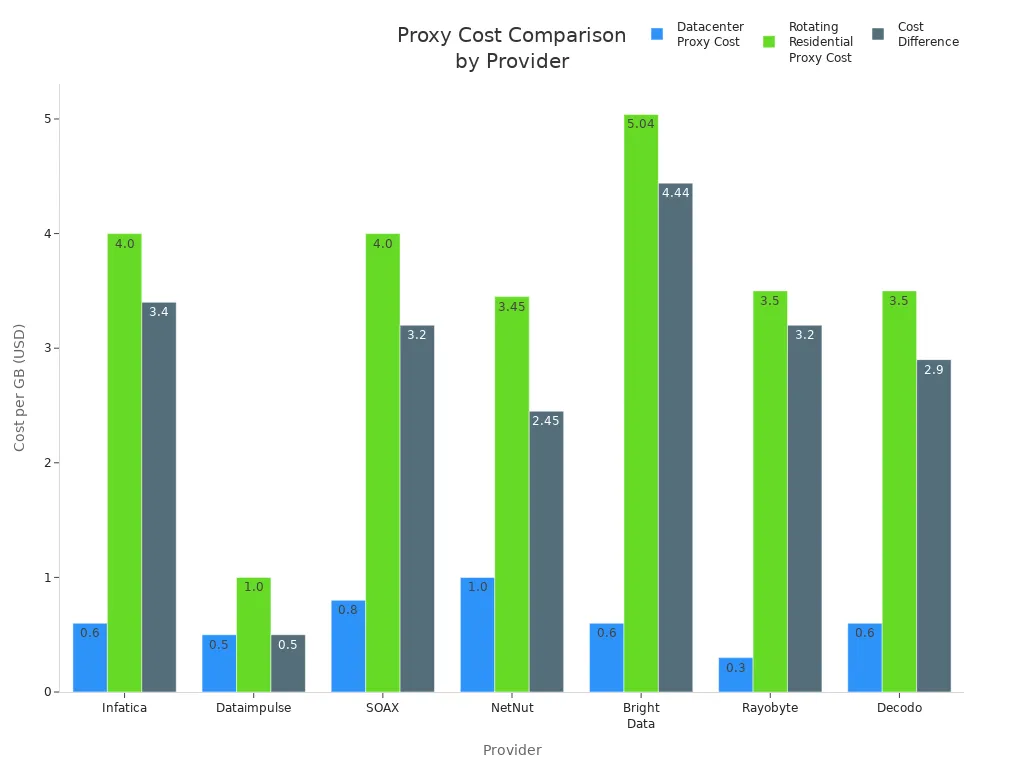
But datacenter proxies are easier for websites to spot. They do not belong to real people or ISPs. Sites can block them if you do not change IPs or act like a real user. Use them when you need speed and low cost, but watch out for blocks.
Proxy Managers
Proxy managers help you control and switch proxies for scraping. They make it easier by changing IPs, handling sessions, and checking how well things work. Some proxy managers use AI to pick the best proxy for each job. They help you avoid bans and handle lots of proxies.
Some well-known proxy manager tools are Oxylabs and Bright Data. These tools give you:
Automatic IP changes
Session control
Live tracking of how things work
Spotting bans and trying again
Working with scraping apis and scraping tools
Using a proxy manager can help you win more and spend less. You can collect lots of data without changing proxies by hand.
Scraping APIs
Scraping apis are special tools that do everything for you. They handle IP changes, browser actions, sessions, and even JavaScript. This makes getting data much easier. You do not have to set up proxies or write hard code.
Scraping apis like ScraperAPI and ZenRows are popular. ScraperAPI works every time on sites like Amazon and Idealista. ZenRows does not work as well.
API | Website | Success Rate | Average Response Time (seconds) |
|---|---|---|---|
Yilu Proxy API | Amazon | 100% | 40.65 |
Yilu Proxy API | Idealista | 100% | 22.28 |
Yilu Proxy API | Glassdoor | 100% | 20.48 |
ZenRows | Amazon | 20% | 6.58 |
ZenRows | Idealista | 0% | 0 |
ZenRows | Glassdoor | 0% | 0 |
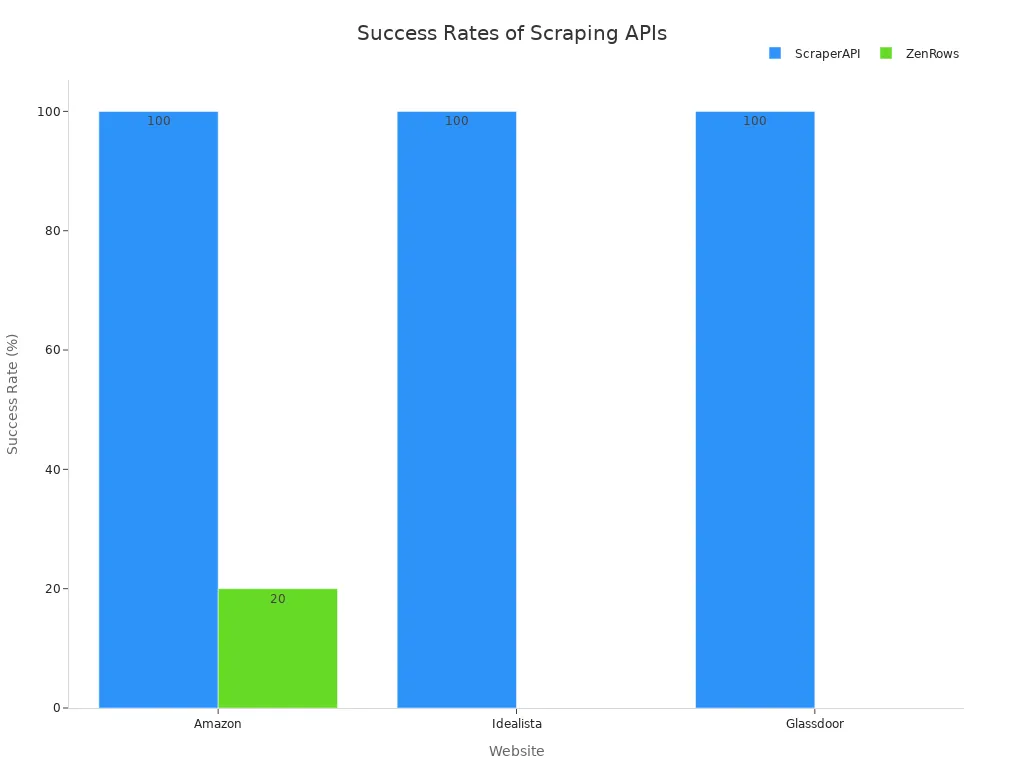
Scraping apis save you time and help you make fewer mistakes. They are great for developers who want fast and easy data extraction api services without handling proxies.
Browser Automation Tools
Browser automation tools like Puppeteer and Selenium let you control a browser for scraping. You can use them to act like a real person on websites. These tools help you get data from sites with lots of JavaScript or tricky layouts.
Puppeteer works with Chrome and is quick and simple.
Selenium works with many browsers and languages.
Both can run without showing a browser window.
Browser automation tools are good for scraping hard sites. You can use them with residential or mobile proxies for better results. Using browser automation with rotating proxies helps you avoid blocks and get more data.
Open-Source Solutions
You can use open-source proxy tools for scraping, like mitmproxy. Mitmproxy lets you make your own proxy rotation system in Python. You can change proxies, save answers, and skip things you do not need. Open-source tools give you control, but you may need more tech skills.
Some paid proxy services have extra features, but open-source tools are good if you want to build your own setup.
Tip: Try Scrapoxy if you want a free proxy manager that works in the cloud and with many scraping tools.
With so many proxy solutions and scraping apis, you can pick what works best for your data collection and extraction needs.
Rotating Strategies
Manual vs. Automated Rotation
When you scrape websites, you must pick how to change proxies. You can do this by hand or let a system do it for you. Each way has good and bad points.
Control: If you change proxies by hand, you decide when to switch. You can pick a new proxy if one stops working. This is good if you want to watch every step.
Efficiency: If you use automated rotating, the system changes proxies for you. It follows rules like where the IP is or how fast it works. You do not need to stop and do it yourself.
Reliability: Manual rotation lets you check each request. This can make it more reliable. Automated rotating keeps your scraping going longer. It finds new IPs fast.
Security: Automated rotating can make scraping safer. It changes proxies at random times. This makes it harder for websites to catch you.
Cost: Manual rotation does not cost money but takes more work. Automated rotating often needs paid tools or services.
If you have a small project or want to control everything, manual rotation may be best. For bigger jobs, automated rotating is better. It keeps your rotating proxies working and helps you collect data without stopping.
Proxy Rotation Tools
You can use special tools to help change proxies. These tools make it easy to switch IPs. They help keep your scraping fast and safe. Here is a table that lists some top proxy rotation tools:
Proxy Rotation Tool | Key Features | Use Cases | Advantages |
|---|---|---|---|
Shifter | Automatic IP rotation, unlimited threads, global coverage | Market data scraping, trading | Runs 24/7, reduces detection, handles high requests |
NodeMaven | High-speed proxies, flexible rotation, 99%+ uptime | SEO, ad checks, cybersecurity | Custom rotation, reliable, real-time scraping |
Oxylabs | Large proxy pool, AI-powered rotation, 99.9% uptime | Enterprise scraping, e-commerce | Premium proxies, AI rotation, high reliability |
Scrapeless | Automatic rotation, anti-captcha, geolocation | Scalable scraping, anti-bot sites | Combines rotation with captcha solving, cost-effective |
Scrapeless is special because it mixes automatic rotating with anti-captcha help. This makes it strong for big scraping jobs. Tools like Selenium let you control browsers. But they do not have built-in rotating proxies and can be slow for large tasks. Using a tool made for rotating proxies helps you get more data with less trouble.
Bright Data Alternatives
Commercial Proxy Services
If you want bright data alternatives, there are many strong proxy services. These companies give you different proxy types, trial choices, and ways to get help. You can pick a proxy service that fits your needs for speed, trust, and cost. Here is a table to help you compare the best options:
Proxy Service | Proxy Types Offered | Trial Options | Support Channels | Notable Features | Performance (Success Rate / Speed) |
|---|---|---|---|---|---|
Yilu Proxy | Residential, ISP, Mobile, Datacenter, Private | 3-day free trial | 24/7 chat, email, Discord, docs | Easy setup, strong scraping tools | 99.43% / 0.57s |
SOAX | Residential, Mobile, US ISP, Datacenter | 3-day trial for $1.99 | 24/7 chat, email, phone, Telegram | Secure, customer-focused | 99.03% / 1.05s |
NetNut | Rotating/Static Residential, Mobile, Datacenter | 7-day trial for businesses | 24/7 email, live chat | High security, uptime guarantee | 93.52% / 2.13s |
ScraperAPI | Residential, Datacenter | 7-day free trial, 5,000 API credits | Enterprise support, Slack | Smart rotation, async scraping | 99.35% / 1.03s |
Oxylabs | Residential, Mobile, Datacenter | Subscription, pay-as-you-go | Transparent pricing, discounts | Large pool, premium service | N/A |
Smartproxy | Residential (~40M) | Small plans, budget-friendly | APIs for scraping, social media, SERP | Cost-effective, easy to use | N/A |
Massive Proxies | Residential (~1M) | Bandwidth-based pricing | N/A | Low response, high success, SERP API | 99.87% / 0.52s |
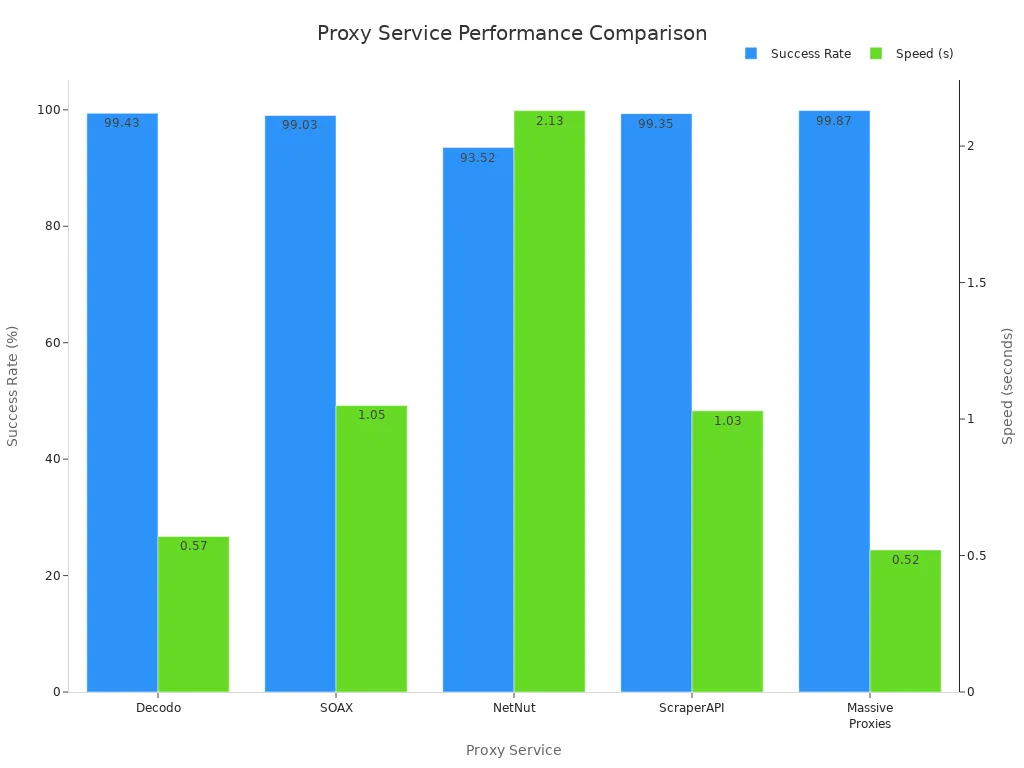
These proxy services have high success rates and fast speeds. ScraperAPI gives you more than 90 million IPs and smart rotation. NetNut is good for uptime and security. Massive Proxies is great for quick replies. These bright data alternatives help you pick the best proxy for your project.
Integrated Scraping Platforms
You might want an easier way to scrape data. Integrated scraping platforms like Octoparse put proxy management and scraping tools together. You do not need to set up proxies or change them yourself. These platforms make web scraping simple for beginners and save time.
Feature / Aspect | Integrated Scraping Platforms (e.g., Octoparse) | Standalone Proxy Services |
|---|---|---|
Setup Complexity | Minimal, simple clicks | Separate setup and integration |
Proxy Management | Built-in, automatic | Manual rotation and retry logic |
Support | One team for all support | Proxy-focused support |
Pricing | Simple, per-GB, no hidden fees | Can be complex |
Feature Specialization | General-purpose, easy for most projects | Advanced targeting, large IP pools |
Flexibility | Limited to platform’s tools | Works with many scraping tools |
User Experience | Beginner-friendly | Needs technical skills |
Infrastructure Management | Low overhead, all-in-one | Separate management needed |
Use Case Recommendation | Good for 80% of scraping projects | Best for large scale or special needs |
Note: Integrated scraping platforms are best for most people who want easy and quick results. If you want more control or have special needs, a standalone proxy service provider may be better for you.
Comparison Table

Effectiveness
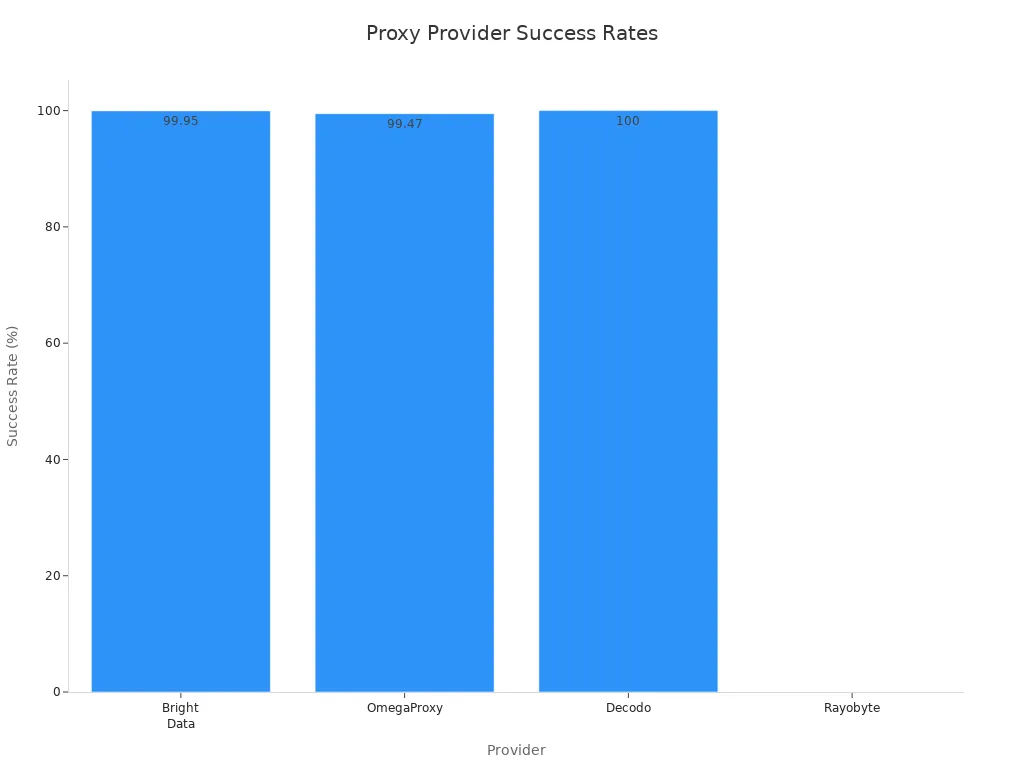
When you pick a proxy for data collection, you want it to work well. Residential proxies usually give the best results for getting data. Their success rates can be between 44% and 85%. This depends on how you set up your user agent and session cookies. Bright Data and Oxylabs have huge proxy pools and smart geo-targeting. This lets you reach more websites and get the data you want. Setting things up the right way helps you collect more data.
Provider | Success Rate / Uptime | Proxy Pool Size | Geo-targeting Coverage | Key Features & Rotation Options | Pricing Highlights (approx.) |
|---|---|---|---|---|---|
Yilu Proxy | 99.95% | 150+ million IPs | 195 countries, city, ZIP, ASN | Rotating & sticky sessions, low latency | $2.50 – $4/GB |
OmegaProxy | 99.47% | 90+ million IPs | 220+ regions | Automatic switch, rotating & sticky sessions | $6/GB |
Decodo | 100% uptime | 125+ million IPs | 195 countries | Auto IP rotation per request or custom intervals | $0.6 – $7.5/GB |
Rayobyte | Not stated | 300,000+ datacenter IPs | Multiple countries | Rotating proxies with sticky sessions | $0.23 – $0.30/GB |
Note: How well you collect data depends on both the provider and your setup.
Reliability
You need proxies you can trust for smooth data collection. Residential proxies are good because they use real IPs from ISPs. This means they do not get blocked as much. They also change IPs often, so it is harder to get caught. Datacenter proxies work for easy sites but can get blocked on hard ones. Scraping APIs and proxy managers help by changing IPs and trying again if needed.
Aspect | Residential Proxies | Datacenter Proxies |
|---|---|---|
Reliability | More reliable for continuous scraping; less likely to be blocked or detected due to real ISP IPs. | Easier to detect and more prone to blocks, especially on sites with advanced anti-bot systems. |
IP Sharing | IPs originate from real residential users, reducing risk of prior blocking. | Shared IPs can be blocked due to other users’ activities, reducing reliability. |
Connection Stability | Less stable; depends on users’ home networks which can disconnect unpredictably. | More stable; enterprise-grade networks provide consistent and low-latency connections. |
Scraping Ability | Better at bypassing geo-restrictions and anti-crawler measures; suitable for restricted websites. | Suitable for simple scraping targets; poor performance on sites with moderate to strong anti-scraping. |
Rotation Benefits | Rotation improves reliability by masking requests across multiple IPs. | Rotation helps but still less reliable than residential proxies due to IP source. |
Using a good proxy service helps you keep collecting data without stops.
Cost
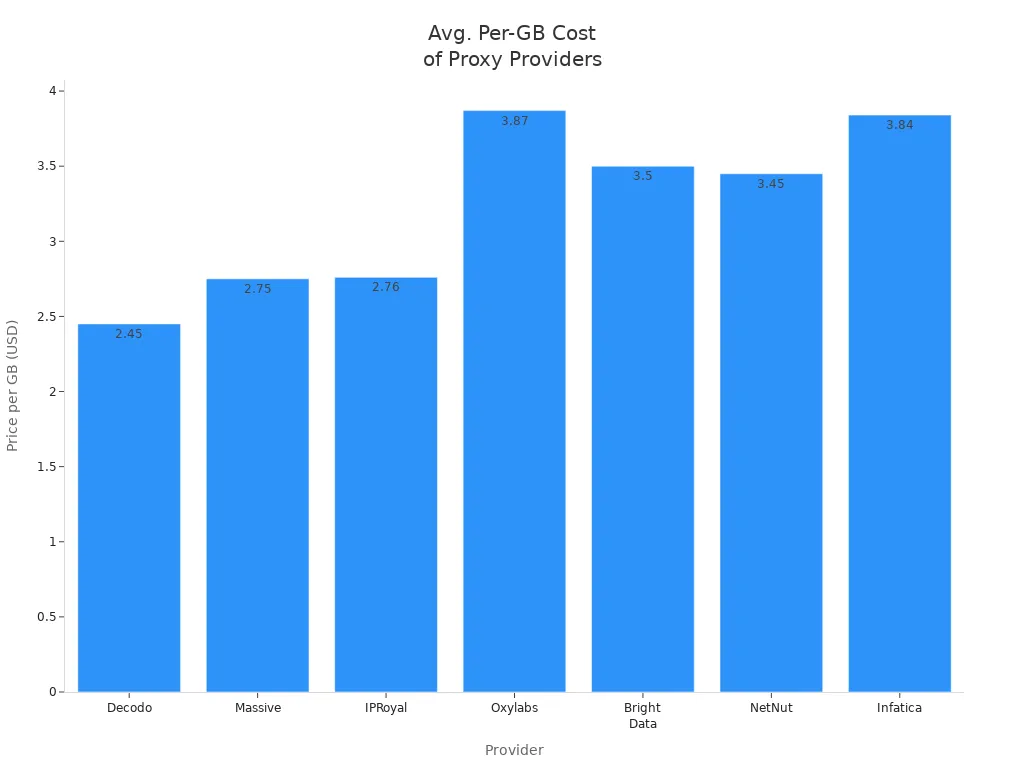
You want to save money but still get good results. Most providers charge by the gigabyte. Residential proxies cost more but work better for hard sites. Datacenter proxies are cheaper and work for easy sites. For medium data collection, you will pay about $2.45 to $3.87 per GB with most providers.
Provider | Medium Usage Price (25-50 GB) | Notes on Pricing Model and Monthly Cost Range |
|---|---|---|
Decodo | $2.45 per GB | Session-based plan: $75 per port/month unlimited bandwidth |
Massive | $2.75 per GB | Competitive pay-per-GB pricing |
IPRoyal | $2.76 per GB | Affordable rotation with mixed IP types |
Oxylabs | $3.87 per GB | Enterprise-grade features |
Bright Data | $3.50 per GB | Volume discounts at high usage |
NetNut | $3.45 per GB | Pay-per-GB pricing |
Infatica | $3.84 per GB | Pay-per-GB pricing |
Tip: Always check how the pricing works and look for free trials before you buy.
Choosing the Right Substitute
Use Case Matching
You need to pick the right scraping tool for your goals. First, think about what data you want to collect. If you need local data from other countries, use proxies with geo-targeting. Residential proxies are good for this because they use real devices. They help you avoid getting blocked. If you want to collect lots of data, choose providers with many IPs and strong rotation.
Here are some things to look for when choosing a data collection tool:
Get local data with geo-targeting
Easy to set up and get help
Works with popular scraping tools and APIs
Has IP rotation, whitelisting, and strong security
Follows legal rules and is sourced ethically
Proxy type matches the website’s defenses
Fast speed and high uptime for good scraping
Controls sessions, like sticky sessions
Fits your budget
Proxy type works with your scraping setup, like user-agent and browser fingerprinting
Enough proxies for how often and how much you scrape
You should also change user agents and headers with your proxies. This helps you not get caught and keeps your data collection smooth.
Budget Considerations
You want a cheap option that still works well. Datacenter proxies cost less and work for easy sites, but get blocked more. Residential proxies cost more but work better for hard sites. Some providers give free trials or money-back offers, but not all trials are clear.
Here is a quick look at trial offers:
Provider | Trial Duration | Traffic Limit | Key Features & Limitations |
|---|---|---|---|
Yilu Proxy | 7 days | 5GB | Big IP pool, geo routing, Turbo Mode, premium quality |
Dataimpulse | Not specified | Not specified | Free trial or refund, smaller pool, slower speeds |
Rayobyte | Not specified | Not specified | Free trial or refund, flexible pricing, slower response |
Yilu Proxy is special because it gives a 7-day free trial and 5GB of traffic. You get top features like a big IP pool and fast speeds. This makes it a smart pick for anyone who wants to try high-quality proxies before buying. Try Yilu Proxy’s free trial to see how it can help your data collection and extraction projects.
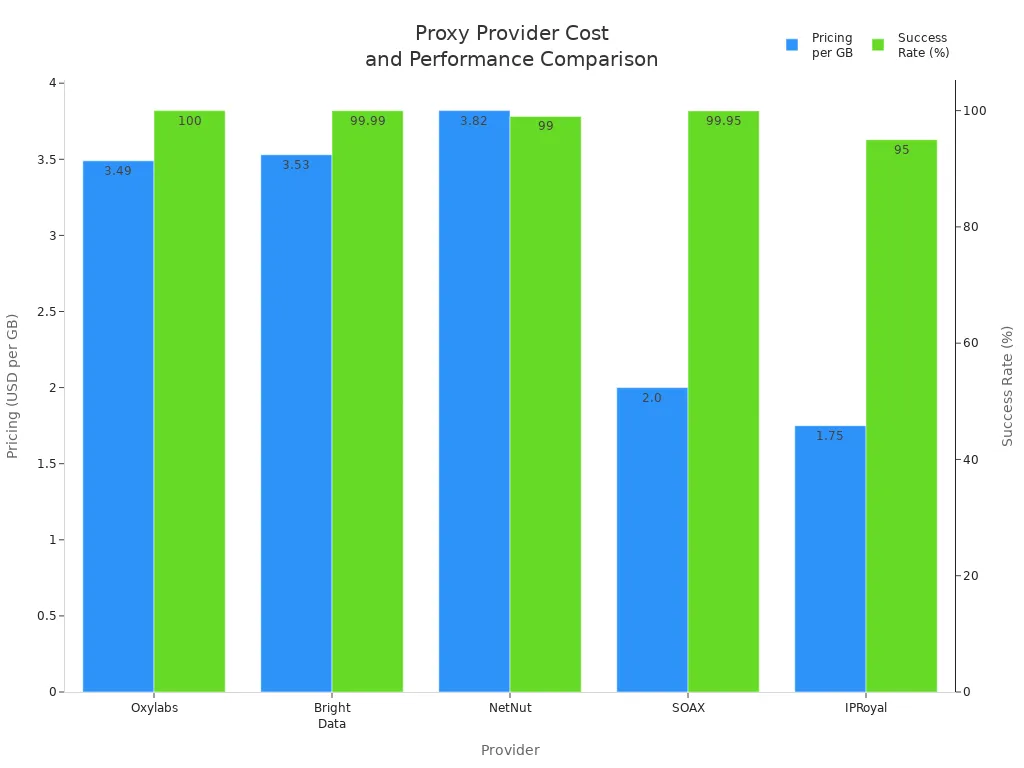
You can pick from many proxy choices. Each one works for different needs and prices. Some providers like Oxylabs and Bright Data cost more. They have big IP pools and high success rates. These are good for big companies. Cheaper options like IPRoyal are better for small jobs. Look at the table to compare them:
Provider | Price/GB | Success Rate | IP Pool Size | Best For |
|---|---|---|---|---|
Oxylabs | ~$3.49 | High | Very large, global | Business, enterprise |
Bright Data | ~$3.53 | 99.99% | 80M+, worldwide | Enterprise, ad checks |
NetNut | ~$3.82 | ~99% | Large, global | Business, ad checks |
SOAX | ~$2.00 | 99.95% | Large, global | Flexible, compliance |
IPRoyal | ~$1.75 | Decent | Smaller, limited | Budget, small projects |
You can try Yilu Proxy’s free trial. It has a big IP pool and smart rotation. This can help you get better scraping results.
FAQ
What is the main difference between rotating proxies and residential proxies?
Rotating proxies switch your IP address a lot. Residential proxies use real home IPs from people. Websites think you are a real person with residential proxies. This means you get blocked less. Rotating proxies can use datacenter or residential IPs.
Can you use browser automation tools with proxies?
Yes, you can use proxies with tools like Puppeteer or Selenium. You set the proxy in the tool’s settings. This helps you scrape sites with JavaScript or strong anti-bot rules.
Why do some proxies get blocked more often?
Websites block datacenter proxies more because they come from servers. Residential proxies look like real people, so they get blocked less. Good rotation and changing user agents help you avoid blocks.
How do scraping APIs make data collection easier?
Scraping APIs do proxy rotation, session control, and CAPTCHAs for you. You send a request, and the API gives you the data. This saves time and helps you make fewer mistakes.
Is there a free way to try premium proxies?
You can try Yilu Proxy’s free trial. You get 7 days and 5GB of traffic. This lets you test premium features before you buy.