
 By Yilu Support

If you want to buy rotating residential proxy for the best performance in 2025, it’s important to choose the right type for your specific needs. Rotating proxies are ideal for scraping and gathering large amounts of data because they frequently change IP addresses. On the other hand, static residential proxies provide a single IP that remains constant, which is useful for account management or gaming. The table below highlights the key differences between rotating residential proxies and static residential proxies:
Aspect | Rotating Residential Proxies | Static Residential Proxies |
|---|---|---|
IP Assignment | Changes IP for each request or interval | Keeps the same IP throughout your session |
Anonymity | Harder for websites to track or block | Easier to detect if used often |
Best Use Cases | Web scraping, bot actions, geo-restricted content | Social media, gaming, steady account access |
Detection Risk | Lower due to frequent IP changes | Higher with repeated use |
Choosing the right residential proxies is crucial for web scraping, privacy, and account management. If you want to buy rotating residential proxy, consider trying both rotating and static options with Yilu Proxy’s free trial. This way, you’ll receive clear guidance tailored to your needs for both rotating proxies and static choices.
Key Takeaways
Rotating residential proxies switch IPs a lot. This helps with web scraping and stops bans.
Static residential proxies use one IP all the time. They are good for managing accounts and staying online.
Rotating proxies hide your identity well and get past geo-blocks. They can cost more and sometimes run slower.
Static proxies give steady and quick connections. But they can get blocked if you scrape too much.
You should try both proxy types with a free trial. This helps you pick what works best and makes your online jobs easier.
Rotating Residential Proxies
How Rotating Proxies Work
Rotating residential proxies help you hide who you are online. They do this by changing your IP address a lot. These proxies use real IPs from people’s homes. This makes your internet traffic look normal. Here is how rotating proxies work:
You send a request to the proxy server.
The server chooses a random IP from many real devices.
Your request goes to the website with this new IP.
The website sends its answer back to the proxy server.
The proxy server gives the data back to you.
Each new request gets a different IP, or you can set it to change after some time.
Rotating residential proxies use HTTP, HTTPS, or SOCKS5. HTTP and HTTPS are used for web scraping and browsing. SOCKS5 is safer and works with more types of traffic. You can set the IP to change every request or every session. This makes rotating proxies hard to spot and helps you avoid bans.
Web Scraping with Rotating Proxies
If you want to collect data from websites, rotating proxies are a good choice. They make web scraping safer and easier. When you use rotating residential proxies for web scraping, you are less likely to get banned. The IP changes with every action, so websites think each request is from a new user. This is important when you need to get lots of data without being blocked.
Rotating proxies are great for scraping e-commerce, travel, and real estate sites. They help you deal with rate limits and try again with a new IP if something fails. This helps you get more data and keeps your project running well. For big scraping jobs, rotating residential proxies let you collect information from many pages fast.
Pros and Cons
You should know the good and bad sides of rotating proxies before you start. Here is a table to help you compare:
Advantages | Disadvantages |
|---|---|
High anonymity with real user IPs | Higher cost than datacenter proxies |
Rotating IPs reduce detection and bans | Speed can vary due to real user connections |
Access geo-targeted content easily | |
Bypass geo-restrictions and CAPTCHAs | |
Great for ad verification, SEO, and market research |
Rotating residential proxies give you strong privacy and lower risk of bans. The big IP pool and changing IPs make your traffic look real. But, these proxies can cost more, and speed may change based on the network. For most uses, the good things about rotating proxies are better than the bad, especially for web scraping and tasks that need privacy.
Static Residential Proxies
How Static Proxies Work
Static residential proxies are used when you need the same IP. These proxies give you one IP from a real home. The IP does not change while you use it. This helps you keep the same online identity. You can stay logged in without getting kicked out. Static residential proxies often come from ISPs or people who share their internet. You get your own IP, so you do not share it with others. This makes it easier to avoid CAPTCHAs and bans. Your traffic looks normal and trusted.
Static residential proxies use one IP from a real home.
The IP stays the same for a long time.
You get a steady connection for your work.
These proxies help with tasks that need the same IP.
Your traffic goes through a real home IP, so websites have a hard time seeing you use a proxy.
Best Use Cases
Pick static residential proxies if you need a steady connection. They are good for social media, long browsing, and using many accounts. Businesses use them for privacy and keeping the same IP. You can use them for eCommerce, SEO, price checks, and ad checks. They also help with market research and brand safety. If you want to avoid bans and keep working, these proxies are a good pick.
Tip: Static residential proxies are best for safe tasks and long online work. You get fewer problems and more steady service than with rotating proxies.
Pros and Cons
Here is a table to show the good and bad sides of static residential proxies:
Benefits of Static Residential Proxies | Drawbacks of Static Residential Proxies |
|---|---|
Very steady and reliable | Not flexible because the IP does not change |
Fast speeds and quick response | You must manage them to avoid blocks |
Same IP for your whole session | Not good for big scraping jobs |
Real IPs from ISPs look real | More work if your IP gets blocked |
Good for social media, eCommerce, SEO, ad checks, and research | Using the same IP a lot can cause blocks |
Static residential proxies give you a steady connection and help you skip security checks. You get fast speeds and can do your work easily. The fixed IP makes your traffic look real, so you can get past anti-bot rules and geo-blocks. But you need to watch how you use them. If you use the same IP too much, you might get blocked. For big scraping jobs, rotating proxies are better.
Dedicated vs Rotating Proxies
Key Differences
When you look at dedicated and rotating proxies, you notice they work in different ways. Dedicated proxies give you one IP address that only you use. This means you get strong safety and steady speed. You do not have to share your IP with anyone else. This helps you avoid slowdowns and problems from other users. You can also change your IP when you want, which keeps you safe from blacklists.
Rotating residential proxies are not the same. These proxies let many people use the same IPs and change the IP often. This makes it harder for websites to block you and gives you more privacy. But, since you share IPs, your speed might be slower or less steady. Rotating proxies give you lots of IPs, but how well they work depends on how many people use them at once.
The table below shows the main things to know about dedicated and rotating proxies:
Feature | Dedicated Proxies | Rotating Proxies |
|---|---|---|
IP Usage | Exclusive (one user) | Shared (many users) |
Security | High | Good, but less than dedicated |
Performance | Consistent, fast | Can vary |
Anonymity | Good | Very high |
Best For | Account management, gaming | Web scraping, research |
Note: When you pick between dedicated and rotating proxies, do not just think about speed. You should also think about safety, how steady they are, and how often you need to change your IP.
When to Buy Rotating Residential Proxy
You should get a rotating residential proxy if you want to hide who you are online or stop websites from blocking you. Rotating residential proxies change your IP address a lot, so you can collect data from websites without getting banned. If you need to gather lots of data for research, ads, or online stores, rotating proxies are a good pick. These proxies use many real IPs, so websites cannot track you easily.
Rotating proxies also help you get past CAPTCHAs and see content from other places. If you want to do SEO scraping, check out other companies, or look at prices on many sites, rotating residential proxies work well. Choosing between dedicated and rotating proxies depends on what you need. If you want many IPs and lots of privacy, pick rotating. If you need one steady IP for accounts, pick dedicated.
Tip: You might also hear about sticky and rotating proxies. Sticky proxies keep the same IP for a while, but rotating proxies change IPs often. For big data jobs, rotating IPs help you avoid getting blocked.
When you choose between sticky and rotating proxies, think about your job. If you need to stay logged in, sticky is better. If you want to avoid bans, rotating is best. Always pick the proxy type that fits your project.
Rotating Proxies vs Static: Comparison

Speed and Performance
You want high speeds when you use proxies for scraping. Rotating proxies often show variable speeds. Many things affect this, such as the size of the IP pool, where the IPs come from, network congestion, and how often the IPs change. If you use a large pool and set the rotation well, you can get more stable speeds. When you test rotating proxies, you should check latency, throughput, and connection success. These tests help you find proxies with low latency and good download speeds.
Static residential proxies usually have higher latency and slower speeds. This happens because your traffic goes through real ISPs and extra network hops. Server load, bandwidth limits, and distance also slow things down. Even so, static proxies give you a steady connection, which helps if you need to keep the same IP for a long time.
Tip: For tasks that need fast, repeated scraping, rotating proxies with a well-managed pool can give you better performance.
Anonymity and Detection
Rotating proxies give you high anonymity. They change your IP address often, making it hard for websites to track you. This helps you avoid bans and makes your traffic look like it comes from many real users. If you use tricks like user-agent rotation and random request timing, you can lower your detection risk even more. Rotating residential proxies work best for scraping jobs that need to dodge anti-bot systems.
Static proxies keep the same IP. This is good for long sessions, but it makes you easier to spot if you send many requests. If you use one IP for heavy scraping, websites may block you. You get a stable identity, but you trade off some online anonymity.
Reliability and Cost
You want reliable proxies for long-term scraping. Static proxies give you a fixed IP and stable connection. This is great for managing accounts or running sessions that last a long time. You must watch for bans, though, and sometimes change your IP if you get blocked. Rotating proxies switch IPs for you, so you do not need to worry as much about bans. They are easier to manage for big scraping projects.
Here is a table to help you compare costs and reliability:
Proxy Type | Reliability for Long-Term Tasks | Typical Cost Range (2025) | Pricing Model |
|---|---|---|---|
Static Residential | High stability, needs manual upkeep | Higher than rotating proxies | Monthly per IP + traffic |
Rotating Residential | Easier to manage, less stable speeds | $0.65 to $8.4 per GB | Charged by traffic (per GB) |
Rotating proxies often cost less for high-volume scraping because you pay by traffic. Static proxies cost more, but you get a steady IP for your work. Choose the type that matches your project and budget.
How to Choose for Web Scraping and More

Scenario-Based Recommendations
Picking the right proxy type depends on your goals. You should think about how reliable, fast, and safe you want your connection to be. Websites try to block scraping, so you need to plan. Here is an easy guide to help you choose:
Web Scraping and Large-Scale Scraping
If you want lots of data from many sites, buy rotating residential proxy. Rotating proxies change your IP address often. This makes it tough for websites to block you. You can collect lots of data without getting banned. Rotating residential proxies work best for scraping solution jobs like price checks, ad checks, and review tracking.Rotating proxies help you avoid getting caught and CAPTCHAs.
They use real IPs from ISPs, so your traffic looks normal.
You can see content from different places.
Managing Multiple Accounts
For social media or online store monitoring, static residential proxies or ISP proxies are smart picks. You get a fixed IP, which helps keep sessions active. You can handle many accounts without losing access.Static proxies give steady connections and fewer login problems.
ISP proxies are fast and look real, so they work well for account tasks.
Privacy-Focused Activities
If you care most about privacy, residential proxies are best. They use real home IPs, so you are harder to spot. High-anonymity proxies hide who you are and that you use a proxy.Using anti-detection browsers like Multilogin makes privacy even better.
Getting proxies from trusted sources lowers legal risks.
Scraping Websites with Advanced Anti-Bot Systems
Some sites use strong anti-bot tools. Rotating residential proxies and mobile proxies work best here. They act like real users and change IPs to avoid blocks.Static proxies can get blocked if you scrape a lot.
Rotating proxies spread out requests, so it is harder to get caught.
Legal and Ethical Considerations
Always follow website rules and act fairly. Use proxies from providers with clear rules. Change IPs and send requests slowly to look like a real user.Scraping the right way keeps you out of legal trouble.
Watch how your proxies work and do not take data you should not.
Here is a table to help you compare proxy types for different jobs:
Task | Best Proxy Type | Key Benefits | Limitations |
|---|---|---|---|
Web scraping | High anonymity, avoids bans, geo-targeting | Harder setup, speed changes | |
Managing multiple accounts | Static residential/ISP proxy | Steady sessions, reliable, real IPs | IP can get blocked |
Privacy-focused activities | Residential/high-anonymity | Hard to spot, hides identity | Costs more |
Advanced anti-bot scraping | Rotating/mobile proxy | Acts like real users, spreads requests | Needs more setup |
Tip: When you buy rotating residential proxy, look for high uptime, low delay, and lots of locations. Make sure your proxies work with your scraping tools.
Yilu Proxy Free Trial Benefits
Yilu Proxy lets you try both rotating and static residential proxies for free. You can see which one works best for you before you pay. Here are the main benefits:
You test rotating proxies and static proxies with no risk.
Rotating proxies change IPs often, making it hard for websites to block you.
You lower bans by spreading requests over many IPs.
You handle many accounts safely, giving each account its own IP.
You get past geo-blocks and see content from different places.
You check ads easily by acting like real users from many spots.
Changing IPs and managing sessions helps you avoid blocks and CAPTCHAs.
You test proxy speed, reliability, and session handling before you decide.
Yilu Proxy is known for speed and reliability. The free trial lasts 7 days and gives you 5GB of traffic. You get ISP SOCKS5 proxies, changing IPs, and routing for different places. The service has 99.99% uptime and fast speeds, making it great for scraping and privacy.
Here is a chart comparing Yilu Proxy with other providers:
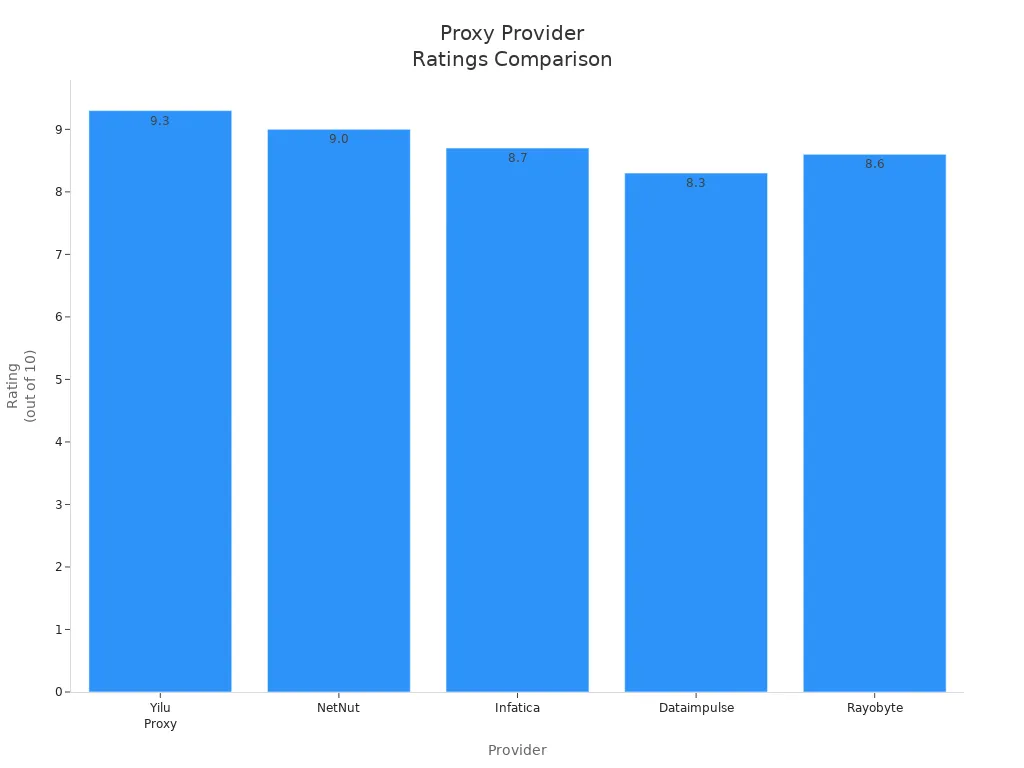
Provider | Trial Duration | Traffic Limit | Key Features & Strengths | Limitations & Focus |
|---|---|---|---|---|
Yilu Proxy | 7 days | 5GB | Big IP pool, fast speed, changing IPs, geo-targeting | Higher price, 5GB limit in trial |
Dataimpulse | N/A | N/A | Cheap, smaller IP pool, good for small jobs | Slower speed, fewer business features |
Rayobyte | N/A | N/A | Flexible prices, many proxy types, decent targeting | Slower replies, less focus on speed |
Note: Yilu Proxy’s free trial lets you compare rotating and static proxies for your own scraping solution. You can see how each type handles speed, sessions, and anti-bot defenses.
In 2025, websites use strong anti-bot systems. Rotating proxies do better against these systems by changing IPs and acting like real users. Static proxies are good for jobs that need a steady identity, but they can get blocked if you scrape a lot. Always match your proxy type to the anti-bot level of the site you want to scrape.
If you want to buy rotating residential proxy, use the free trial to test both types. You will find the best choice for your web scraping, privacy, or account jobs.
You should pick a proxy that fits your needs. Rotating residential proxies are good for web scraping and stopping bans. Static residential proxies are better for managing accounts and keeping sessions steady. Look at what each provider offers before you buy. Check their prices and how they help customers. Try Yilu Proxy’s free trial to see how it really works. Testing shows if the proxy is fast and works with your tools. If you want the best residential proxy, testing it yourself helps you choose wisely.
FAQ
What is the main difference between rotating and static residential proxies?
Rotating proxies change your IP address often. Static proxies keep the same IP for your whole session. You use rotating proxies for scraping. You use static proxies for account management or tasks that need a steady connection.
Can I use rotating residential proxies for social media accounts?
You can, but it is risky. Social media sites may flag you if your IP changes too much. For managing accounts, you should use static residential proxies. They help you keep a stable session and avoid getting locked out.
Are residential proxies legal to use?
You can use residential proxies legally for most tasks. Always follow the rules of the websites you visit. Do not use proxies for illegal activities. Check your local laws before you start.
How do I know which proxy type is best for my project?
Think about your goal.
Use rotating proxies for scraping and data collection.
Use static proxies for account management and long sessions.
Test both types with a free trial to see which works better for you.
Will using proxies slow down my internet speed?
Proxies can affect your speed. Rotating proxies may have more delays because they switch IPs often. Static proxies usually give you a steadier connection. Always test the speed before you start your project.